Monday, December 30, 2019

A Typical Petsitting Visit: Albert; PLUS bonus visit: Frank

As anyone who works with animals can tell you, there's no such thing as a "typical" day. Each visit is as unique as the pet I'm caring for. Here's an example of what I do during a petsitting visit, based on real clients. (I've changed names and certain details to protect their privacy, and all pictures are from Google.)

My stop is a dinnertime visit to a single-family home with a fenced yard. My client is Albert, a five year old neutered male yellow lab. 

I park in the driveway and enter through the side gate. Albert stays in a large outdoor enclosure in the back yard while his people are away, so I don't need to go into the house at all. Hey there, Albert! 

Image result for yellow lab

Albert is barking excitedly and jumping up on the door of his dog run. I ask him to sit, and when he does, I open the door and let him out into the fenced yard. While he runs around making sure every tree and bush is right where it should be, I make his meal: half a can of wet food, and half a cup of dry kibble. I stir it together with a splash of water. Albert is a big dog, but he's bigger than he should be, so he's on a bit of a diet.  I give him his dinner and then fetch his water dish from the dog run. I dump, rinse, and refill it with fresh water, then put it back in the run.

While he licks his feed pan to be sure he's gotten every single molecule of his meal, I walk the yard and pick up any poop I find. I also take a look at the plants to see if any of them need watering. Albert's owners are big gardeners, and they pay me a little extra to run the hose if needed. 

Done eating, Albert? Okay, let's go for a walk.

Albert's owners have taught him very good leash manners. He doesn't pull on the leash at all. In fact, he tends to dawdle a bit while he sniffs here and there, and leaves a dribble to mark his favorite spots.  I take out my phone and start reading aloud to him as we stroll along. 

Wait, what?

Yes, I often read aloud to the pets in my care. I've read classics like The Iliad, The Odyssey, Canterbury Tales, Alice In Wonderland, Dicken's A Christmas Carol, and Spenser's Faerie Queene, and sometimes I read funny stuff like Terry Pratchett or Douglas Adams. Today we're reading one of the Icelandic Sagas -- viking stuff. What do you think, Albert? Would you sail on a boat with this guy Hrut? He sure seems to get into a lot of situations.

Image result for yellow lab in norse helmet

Well, it's something to think about, isn't it. I think you'd look very stylish.

Albert stops to do his business, so I dig a bag out of my pocket. After picking up, I tie a knot in the bag and we head for home. I can see someone approaching about a block away with a German shepherd. Albert is fine with some dogs and not others and I've never been able to figure out what his deciding factor is, so I steer him across the street to avoid a confrontation. I wave and smile to the other walker. Nice dog! 

Back home. Dog bag goes in the trash can. Is today trash day? No, it's recycling, isn't it. I roll the green bin to the curb for pick-up. Come on, Albert, time for your treat.

Once we're safely in the yard with the gate secure, I take off the leash. Albert knows the routine, so he goes straight into his dogloo in the dog run. I toss him a treat and latch the door to the run. You be a good boy, Albert. I'll see you next time. No barking, okay?

I go through the checklist in my head: food, water, yard check, walk.. yep, everything is good. I make sure the yard gate is secure behind me as I leave. 

After a short drive across town...

My next client is a dinnertime visit to a single-family rental home with a three year old neutered male black cat named Frank.
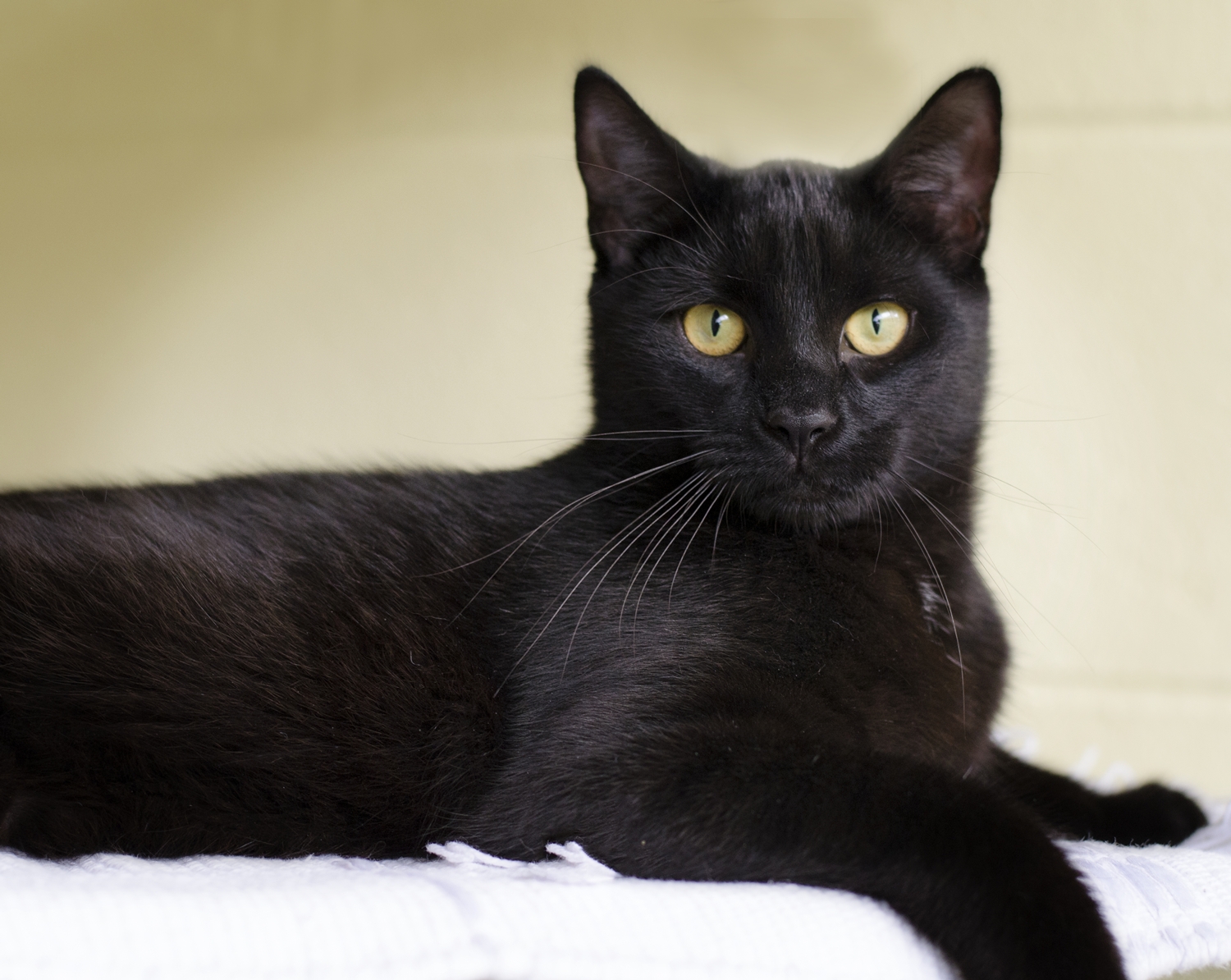
Image result for black cat


I let myself in with my key, and I see Frank run down the stairs and into the kitchen where his food dish is. Frank is a big kitty, but he has the squeakiest kittenish "mew". He's already hollering at me about how he's never been fed in his entire life MEW MEW MEW MEW MEW

Allright, Frank, settle down; I'm getting it. 

Frank gets half a can of wet food in his dish downstairs, and a scoop of dry kibble in his food puzzle upstairs. While he gobbles down his meal, I see to cleaning the catbox. 

I put the bag of litterbox scoopings by the front door so I remember to take it out the the trash when I leave. Then I settle down on the couch and start reading aloud to Frank. He curls up on a folded blanket next to me while I pet him and read, but soon he climbs into my lap and butts his head under my chin. Then he starts kneading on my shoulder, and his claws are sharp! Ouch, Frank!  I move his paws and feel wetness. Frank is a drooler! Some cats do this when they are very content. I take it as a compliment, but I'd rather not be soggy with cat spit, so I move him back to the folded blanket while continuing to pet him. 

I hear voices outside. Neighbors? No, it's right outside the door. And there's a clanking, metal sort of noise. What is going on? I look outside and see three people standing in the driveway. Stay here, Frank. I'm gonna check this out. I take the bag of litter scoopings out to the trash can.
There's an older guy and a younger couple. They introduce themselves as neighbors and the older guy says he's here to clean the gutters. I nod and put the trash in the can. I surreptitiously take a picture of them with my phone, and then go back inside and lock the door. 
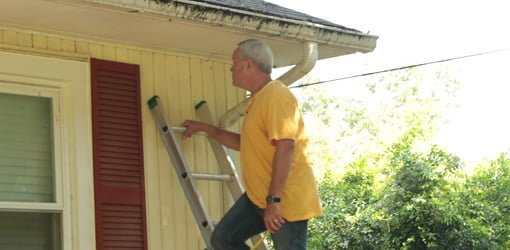
Image result for guy holding ladder driveway gutters
(Remember, all pictures are from Google image search. This isn't the actual guy I'm talking about.)

Inside with Frank, I text my client the picture and tell her what's going on. Does she know these people? She doesn't, so I wait while she contacts her landlord. A few minutes later, I get another text for her: it's okay, the gutter guy is part of the landlord's team. The other couple are next-door neighbors. Nothing suspicious is going on.

Allrighty, then. Frank is fed, his litterbox is clean, I'm soggy with his drool, and all is right with the world. See you tomorrow, Frank. Be good! 

I take the security of my clients' homes very seriously, and I am always alert to any situations that seem unusual. Thankfully, situations like this are very rare. 

I hope you've enjoyed this further look into what it is I do every day. Thank for reading. See you next time!

Tuesday, December 10, 2019

Ask a Petsitter!

I always enjoy talking about what I do, so last week I asked everyone who follows me on Facebook to give me a question to answer. Here's what they asked:


From Art S. My dog hasn’t moved much in the last 20 years. How do I get life into her?

Art, I believe you need to take a careful look at your dog. Start with the eyes: are they fixed and glassy? Perhaps even actual glass? If the tongue is protruding, is it dry and clothlike? Finally, look at the belly and hind legs: do you notice a tag or label of any sort sticking out? If so, your dog is a stuffed toy. Congratulations on your low-maintenance pet!

Image result for old stuffed dog


From Paige L. Do you find that the owners have more anxiety about the pets than the pets do?

Yes, I'd say the owners are more anxious. But that's because they have a bigger brain and understand what's going on. ("We're leaving and won't be home for two weeks!") There's always a little apprehension when leaving your pet in someone else's care. It's understandable to wonder if a change in routine will be upsetting to the pet, or if they will be lonely/worried/bored when family members leave. But I find that most dogs and cats take it very much in stride.

Some pet owners leave very detailed instructions for meal preparation and care, and I love that. I always say "the more you tell me, the better I can do my job". I want to provide care that maintains the pet's regular routine as much as possible. Being in their own home, going for walks in their own neighborhood, and eating their accustomed food at the usual time helps them feel like things are okay.

It's very rewarding to have clients tell me that they are less stressed about going away because they know their pets are happy under my care. 

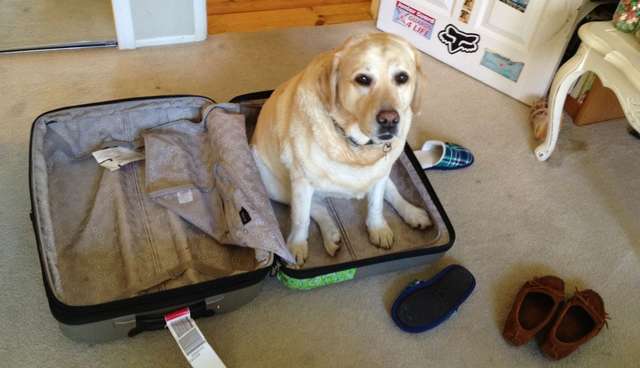
Image result for dog suitcase


From Paige L. What is the best way to prepare your pets for a pet sitter coming in?

The most important thing is to have your dog well-socialized. A dog that's used to meeting people outside of the family will be more relaxed and welcoming when a petsitter arrives. This isn't something you can do in a few days before you leave for vacation, though. Antisocial cats aren't a problem; a list of their preferred hiding places is appreciated so I can make sure they're around and avoiding me, rather than actually missing.

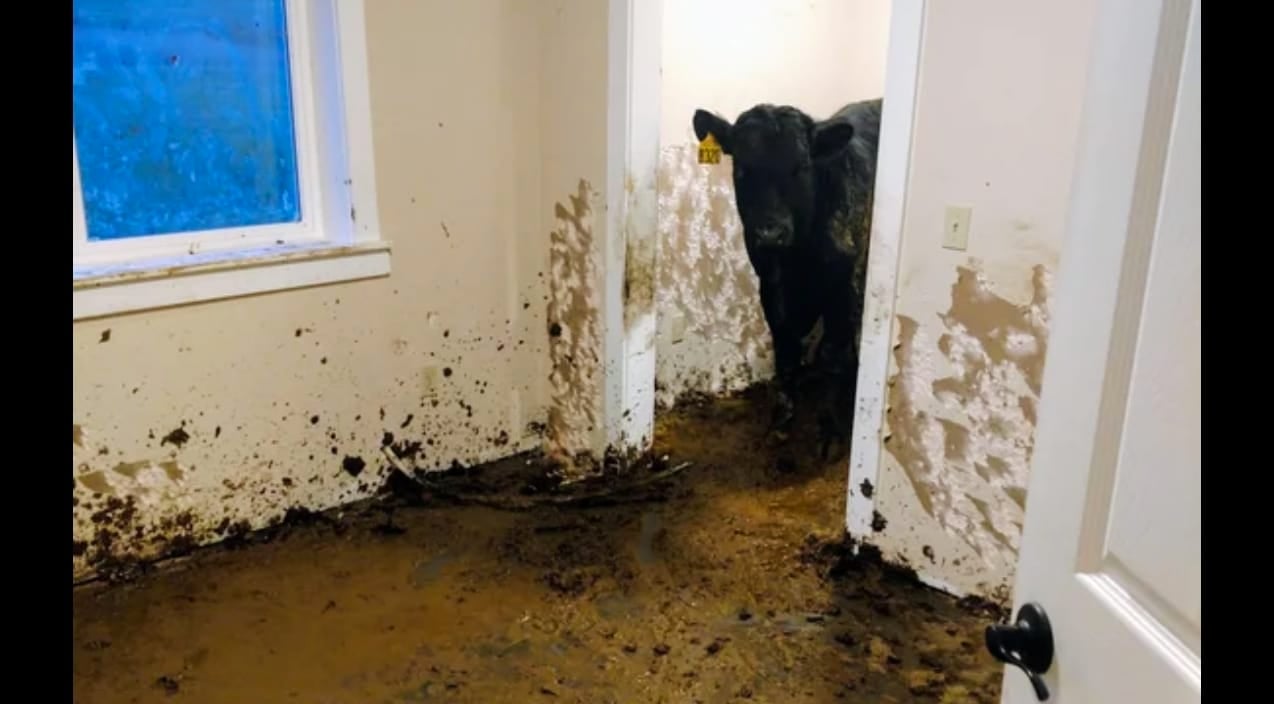
Try to have things arranged as they usually are. If your pet is used to having the run of the house, don't decide to keep them shut in the garage or a spare room "to make it easier". I've seen dogs dig through drywall when they feel stressed and trapped. 

Make sure that there are enough supplies (food, litter, etc) to last until you come back. Have these supplies in a location that makes sense, for example, have extra cat litter near the cat box, not stored on a top shelf in the detached garage. I will go shopping for supplies of your preferred brands if I run out, but there's an additional charge for that because of the inconvenience.

Sometimes I need cleaning supplies to manage messes. A bucket with cleaners and a roll of paper towels or some rags is a super handy thing to leave out for me. 

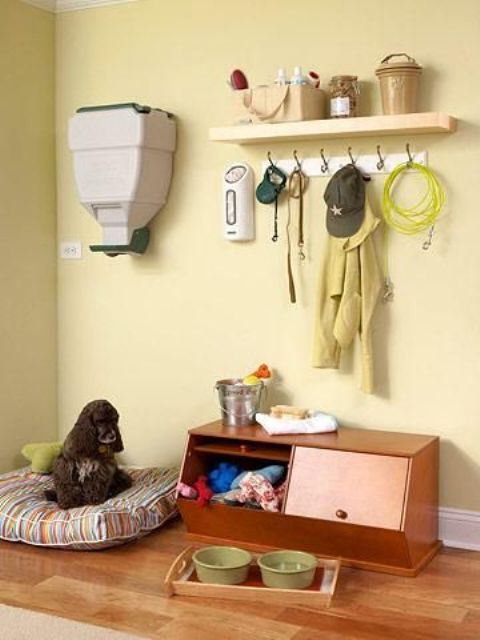
Image result for organized dog supplies
This is a petsitter's dream! So organized!

From Karen E. How do I get my dog to stop pulling on the leash when I take her for a walk?
From Lori B. I have a leash puller. Other than that, she's delightful. How do you stop a 60 lb retriever from taking YOU on the walk?

Oh, this is my favorite question! Here's the simple answer: don't let them. For more details, see my blog posts here on the magic and science of dog walking.  I wrote a whole series. It takes time and you have to be consistent, especially when you have an adult dog that needs retraining, rather than a puppy, but it's totally doable -- and usually you don't need any special tools, just a regular collar and six-foot leash. 


From Elias T. What do you do with a dog who is generally a well behaved dog, but won't stop jumping on people when they come in the house?

You introduce the magic of "sit."  Right now, your dog jumps and dances because that's what she's always done and you haven't told her to do anything different. 

Keep some small treats by the door. When you come in, ask her to sit and give her a treat when she does. Don't stand there watching her bounce around while you say sit sit sit sit sit Sit Sit Sit SIT SIT SIT DARN YOU THIS ISN'T WORKING SIIIIIIIT. That way she's still getting your attention and you're just saying weird sounds but oh well I guess this is how it goes now. Walk in, say SIT and if she doesn't, turn away. Look at your phone or something. Don't push her away or anything. Just pretend she's not there. She'll jump and bark probably, escalating her behavior because HELLO I AM HERE HELLO PET MEEEEEEE and don't you DARE give in to that. Just wait. Eventually, three hours later, she will stop in confusion (or fatigue) and sit down to think about why you are being so weird. Yes! Sit!  you say, and finally give her that treat.

Then go outside again.

Wait, what? 

Yep. This isn't something that will be fixed in one or two tries. Out you go. Wait a few minutes and then come back in. Say SIT and repeat what you did before, ignoring that bouncing dog and only giving her attention when she sits and is quiet. 

But that will take forever! 

Yes it will. Or at least it will feel that way. And believe me, it's not fun for her either-- she's going to be confused. It's how you would feel if a friend came to visit and was suddenly speaking a foreign language. Come on, you'd say. Let's speak English like I'm used to! I don't understand what you're saying. So you make it easier by being calm and quiet and saying that one word you know that she knows: "sit".

She's a smart dog. She wants to do the right thing -- you say she's well-behaved. You'll probably notice the little light bulb over her head click on about the fifth time you come through the door. OOOH I get attention when I sit! then she'll stop jumping and start sitting faster and faster.  

Again, you'll have to be consistent. And you'll have to tell everyone who comes in to ignore her as well, until she learns.

Alternatively, you could give her a roast chicken every time you come in, and then she'll be so busy eating chicken that she won't have time to jump. But that's gonna be a lot of chicken. 

Image result for dog stealing food


From Laura O. Can you teach an old dog new tricks? Or manners?

Absolutely! Any dog can learn new behaviors, although your success will be determined by how consistent you are and how valuable the reward is for the dog. 

It's easier to teach a dog something new than it is to get then to un-learn an established behavior. If your dog is used to sleeping on the couch, for example, and then you get a new couch and decide that you'd rather it wasn't covered in pawprints and dog hair so the new rule is "No dogs on the couch", it's going to take some time to break that habit -- especially if there's someone else in the home that says things like "It's just a for a little while," or "But he looks so comfortable!"


Thank you for your questions, everyone! I'm always happy to talk about what I do. Keep sending me more, and I'll answer them in upcoming blog posts. 

Monday, December 2, 2019

Litterbox Troubles


All cat names have been changed to protect the guilty little poopers' identities and privacy.

Image result for cat poop everywhere


Over Thanksgiving I had four cat clients whose care presented litterbox challenges. I thought an insight on how I work with them might be interesting for you. Here's our kitties:

Sammie is a 13 year old spayed female. She takes daily blood pressure medication that causes constipation, so she also gets a mild laxative powder in her food. She has two litterboxes she uses consistently for peeing, and she poops on the linoleum floor about a foot outside the box.

Jerry is a 6 year old neutered male. Like Sammie, he has two litterboxes available. He pees in the boxes and poops on the floor nearby.

King Leo is a 17 year old neutered male in excellent health. He has one large litterbox he uses consistently, but often pees over the edge.

Carlos is a 19 year old neutered male. He takes blood thinners and has a slight limp due to a recent blood clot in his thigh. He has four litterboxes that he uses occasionally, but he prefers to pee and poop just about anywhere on the cement basement floor.

Disclaimer: Sometimes a cat will change their bathroom habits when they are sick. It's a good idea to have a vet check your kitty if they are having litterbox issues. My four example cats (with the exception of Sammie, who is a pretty pretty princess whose medication regimen sometimes affects her bathroom habits) are healthy and have no medical excuse for their sinful ways.

The first thing I look at when a cat "thinks outside the box" is cleanliness. No one wants to use a toilet that is dirty or smells bad. I scoop out all the clumps and solids, and clean any messes around the box.

If it's a hard surface like tile or linoleum, I prefer to use bleach. It kills germs and odor and it's cheap.  One of my clients told me about using rubbing alcohol to use on rugs or carpets, and I find it works just fine. It also kills germs and odor and is cheap, it evaporates and dries quickly, and it won't discolor the fibers. (Test it in a hidden area first, to make sure.) There are also special enzyme cleaners available in stores, and I've used them with good results.

Getting rid of all traces and smells is imperative. Any lingering residue or odor signals the cat that this is a place where it's okay to go. Scented air fresheners will do nothing; the spot must be scrubbed and sanitized!

Once the area is clean, then I look at the location and position of the box. Does the cat feel exposed? Their animal brains may be domesticated, but their feral instincts still worry about being ambushed. Make sure the cat has little privacy and they feel secure. A place that doesn't get much traffic like the laundry room or a spare bathroom is good. Place the box near a wall or corner for an added feeling of security.

Okay, cats. Your litterboxes are clean and cozy. Let's see how you react.

King Leo promptly steps in and pees over the edge onto the carpet. Well, this is surprising, especially since I was standing right there watching him, and he was looking at me. His nonchalance leads me to believe that he had no idea anything was amiss. He had all four feet in the box and thought he was being a proper gentleman. My recommendation: get a box with taller sides. He's an old cat but he's in great shape, often jumping onto the kitchen counter, so he won't have any trouble jumping over the sides of a tall box, and the taller sides will keep everything inside the box. No more "splash zone"!

Sammie makes no change to her habits; pees in the box, poops on the floor nearby. I wonder if she's trying to communicate that she doesn't feel well? I clean the floor, put down an absorbent puppy pad, and text the owner with my observations.

Jerry continues to use the box for peeing, and moves his pooping place to the carpeted stairway that leads to the room downstairs where his food dishes and litterbox are. I think he's upset that I cleaned up that room, destroying his scent marking, and he's trying to make his territorial boundaries clear: This is my space. No intruders allowed. Stay away!

I clean up the droppings and put some in his litterbox, to help him get the idea. I think he's only marking territory like this because he doesn't know me that well. I'll have a discussion with the owners when they get home about what to do if he continues. There are two small boys in the household and it may be that the cat wants more space and alone time than he's getting.

Carlos is a challenge. He's old and used to doing things his own way. I cleaned and deodorized the main area of the basement where he had been soiling, then blocked it off so he couldn't reach it. I moved the boxes to a different spot nearby hoping that he would use them based on scent. And he sort of did. Then he just found a new area of the basement to whiz all over.

Because I am only hired to clean the litterboxes once a week, it's difficult to tell what the problem is. It may be that he is fussy, and once a box has been used a time or two, he won't use it. Or it may be that he doesn't like the litter. The particular brand his owner uses isn't great at controlling odor, and it may be that he doesn't like the smell.

I clean and deodorize the new place he's found to soil, and block it off so he can't get to it. The same thing has happened when I come the following week: slightly used litter, freshly soiled area of the basement.

Next week I will be assuming daily care of Carlos for a few weeks, and that is when I can really pinpoint what is going on. I'm going to deep clean his litterboxes, try some different litter brands in two of them, and minimize the space available to him in the basement.

Doing this much work isn't really part of my service, but the situation is so advanced that I consider it a health and safety hazard and I must do something in order to continue to provide good care. When the owner returns, I will have a meeting with her to discuss what I've done and to make a plan for going forward.

In closing, most cats are litterbox champs and don't cause a bit of trouble. If there is a problem (and the vet has ruled out medical causes), careful clean-up and some simple changes can often get your cat on the right track. I am happy to help, of course!

And hey, at least you don't have cows.

Image result for cat poop everywhere

Tuesday, November 26, 2019

A typical petsitting visit: Tink and Gregory

As anyone who works with animals can tell you, there's no such thing as a "typical" day. Each visit is as unique as the pet I'm caring for. Here's an example of what I do during a petsitting visit, based on real clients. (I've changed names and certain details to protect their privacy, and all pictures are from Google.)

My stop is a dinnertime visit to a single-family home with a fenced yard. My clients are Tink, a 14 year old black lab who is mostly deaf, and Gregory, a recently-adopted tabby cat they think is about 3 years old.

I ring the doorbell and knock before entering. I'm not sure how well Tink can hear, and I don't want to surprise her. As I enter, I stomp my feet on the mat by the door so she can feel the vibrations. Sure enough, I hear dog tags jingle in the living room, and Tink comes down the hall to greet me. Hi, girl! Do you need to go outside? Let's do that first thing. Tink doesn't go for walks anymore, her hips get too sore, so she gets yard time instead. Her humans left about four hours ago, so she probably needs to pee and I con't like to keep an old dog waiting.

Image result for old black lab


I make sure the front door is closed and locked behind me. Tink and I walk through the kitchen to the back door and we go out into the yard together. I close the sliding door. Gregory is an indoor-only cat, and I don't want him sneaking outside. I make a visual check that both gates are shut and secure. Usually I'll do this before letting a dog out, to prevent a possible escape, but Tink's old hips are a little stiff and I'm not too concerned about her running anywhere. Tink sniffs around for a while, squats and pees, and then lays down on the patio in the sun. It's a nice day, so I decide to let her enjoy that while I go check on Gregory.

Gregory has his food bowls on top of the washer in the hall by the garage so that Tink can't get to the cat food. My instructions say he gets one scoop of dry food and a half can of wet every day. I scoop the kibble into his bowl and then go to the kitchen to wash his wet food dish and check the fridge for an open can. There isn't one. I open a new can, put half in his clean dish, and put the rest of the can in the fridge with a plastic lid on it. Gregory! Kitty-kitty! Chow time! Come and get it! 

...Gregory? Where are you, puss-cat?

I walk through the house, looking in every room. No sign of the cat. I check my notes. The owner hasn't mentioned any favorite hiding spots, but under a bed is a pretty good guess. The master bedroom door is open. I call softly, and look under the bed. Two green eyes glow back at me from the farthest corner. It's okay, Gregory, it's just me. We've met before. Your dinner's ready. I'll go away so you can go eat.

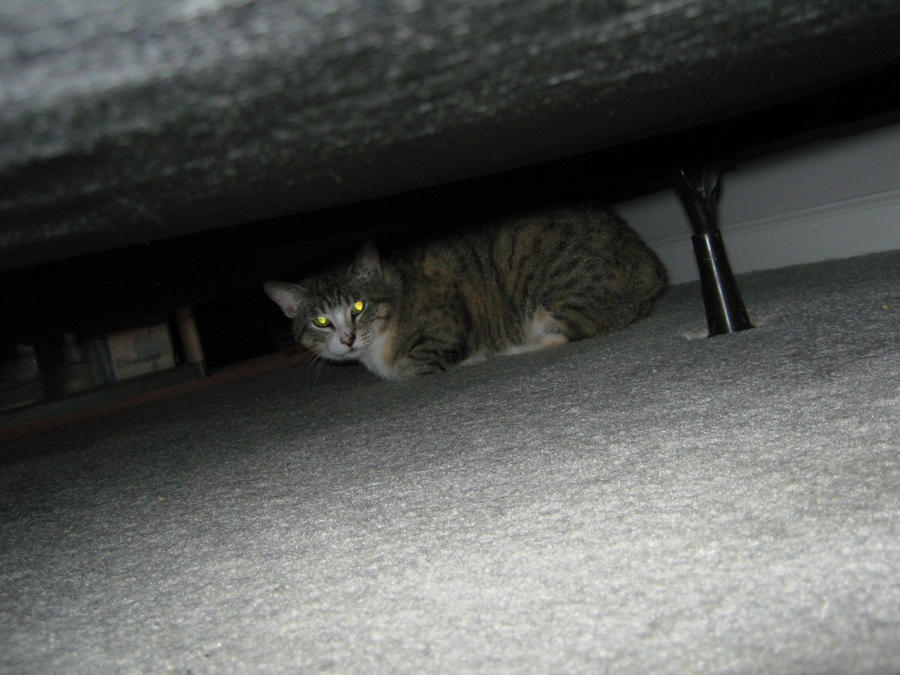
Image result for cat under bed

Tink doesn't want to leave her warm spot in the sun, but she changes her mind when I bang a fork on her metal dog dish. She can hear that, well enough! One scoop of dry kibble, one can of wet food, a measure of her hip supplement and some warm water to mix it all together. Top it off with her prescription pill hidden in a pill-pocket, and it's dinnertime. Bon appetit, pupper! 

While she eats, it's time to clean Gregory's litter box in the basement. In the past, they were having trouble: he would pee in the box, but preferred to poop a few feet away. What the heck? They were using a box with a cover, so I suggested taking the cover off to see if that changed anything. Then they noticed he'd stand in the box, and poop over the side onto the floor. He's a pretty big cat, and I don't think he realized he was missing the mark. They said they had gotten a bigger box for him recently, so I'm interested to see how things are going now.

Oh, wow! They're using an under-bed storage box for his litter! It's really big -- 18" x 36", I'd guess, and the litter is about six inches deep. I whip out my blacklight flashlight to see if there have been any misses, but the floor shows nothing, nice and clean. Good kitty, Gregory! I'm so glad. I scoop his deposits into a plastic bag and tie it shut to carry out to the trash bin.

Done eating, Tink? Right on. Let's go back outside. Dogs usually want to poop after they eat, and Tink is pretty predictable. There we go. Thank you! I pick up her deposit with a plastic bag, tie it shut, and put it in the trash bin along with Gregory's litter box scoopings. 


Back inside, Tink goes to lie down on her bed. All this activity is tiring for her. I look down the hallway to the garage and see that Gregory is eating the wet food. Good deal. Both pets have fresh food and water, their bathroom needs have been met, and they seem comfortable and content. I think my work here is finished!

Okay, you two. I'll see you in the morning for breakfast. Be good! I check to make sure the back door is secure and locked, then shut and lock the front door as I leave.

I hope you've enjoyed this insight into what I do. I'll be doing a few more in the coming weeks featuring different pet care situations. Thanks for reading! 

Tuesday, November 19, 2019

Happy Wolfenoot!

Wolfenoot is a holiday that was invented by a seven year old boy. His mother thought the idea was charming, and posted about it on Facebook in 2018, and since then it's attracted a band of celebrants. You can learn all the details by clicking here.

It's a holiday that celebrates the spirit of wolves and our love of dogs. What a great idea!

It is technically celebrated on November 23, and that's right around Thanksgiving Day in America, which makes it difficult to plan a party that everyone can attend. My Wolfenoot tends to move around a little on the calendar so all my friends can come and play. 

You can tell a child invented the way of celebrating, because it involves gift-giving. And I can understand that; the giving of presents to mark special occasions is an ancient tradition, and who doesn't like getting presents? My family's observance doesn't emphasize the gift aspect, however,  preferring to focus mainly on eating and playing a few "traditional" games. (Can you call something a tradition if you've only done it for two years?) Our celebration goes something like this:

The guests arrive, wearing their wolf-iest apparel: hats with wolf ears and clothing that includes wolf designs. The table is set with wolf-approved snacks of meat, golden cheese, and a spice cake meant to resemble a full moon. Decorations are inspired by nature, autumn, nighttime, and the full moon. Wolves abound! 


Once everyone has arrived and enjoyed their snacks, the games begin. We play a game of Pin the Tail on the Wolf that in hindsight (pardon the pun) seems a little dark. I've seen a similar game called "Boop The Snoot" where the blindfolded player attempts to pin a paper heart onto the wolf's nose. Much cuter than a tailless wolf! 


Then we play a game I call "Wolfie", a variation on the old Cootie game. Everyone gets a sheet of paper and a marker. Players roll a die to win body parts and the first to complete a drawing of an entire wolf wins. It doesn't matter if your drawing skills are good or bad-- this isn't an art contest. In fact, that's what makes it so hilarious and fun: watching everyone's wolves take shape in surprising ways! This is how our dice rolls went:


Everyone wanted to finish their drawings, even after we had our first winner, so we continued playing until everyone had a complete wolf to show off. Look at these beauties! 


How do you celebrate Wolfenoot? 


Monday, November 18, 2019

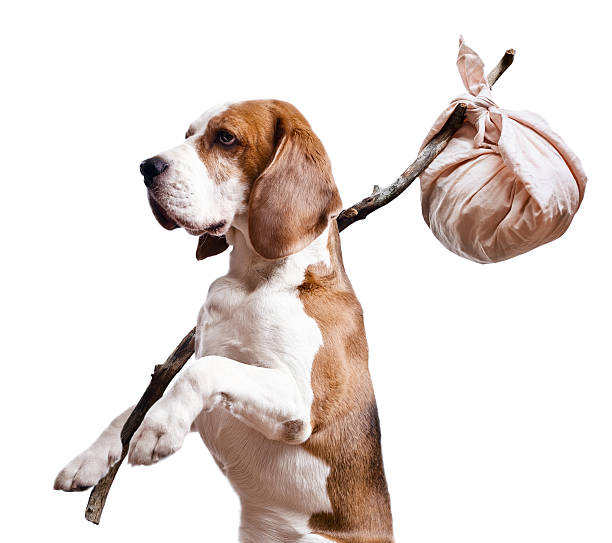
Oh No, I'm LOST!

It's a terrible feeling to lose a pet. Where are they? Are they okay? Will they come back? The anxiety and uncertainty is awful. 

Related image

But according to an ASPCA survey, about 85% of lost pets are recovered. There are some things you can do to help your pet get back home. 

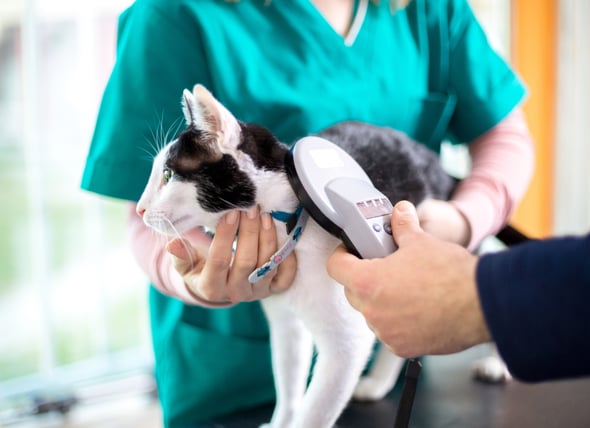
The most important thing you can do to protect your pet is to microchip your pet, and make sure it wears a collar with an identification tag with the owner's name and phone number. Animal shelters  routinely scan for microchips when an animal comes in, and any veterinarian will check for one if asked. 

Image result for pet microchip

Speaking of veterinarians and animal shelters: let them know your pet is missing. Start right away, as soon as you suspect your pet is missing. Check back often, especially with the shelters. Some only give found pets 72 hours to be claimed by an owner before they are put up for adoption or euthanized, so don't delay. Bring in a poster that includes the date your pet was lost, and from what area. Make sure it has your name and phone number, and mention any identifying characteristics that might make your pet stand out. If your pet has any special needs, put them in. Here's an example:

MISSING PET: Arlo is a neutered three year old male black lab. He was last seen on July 23, near the Walmart on Maple Street. He has a white tip on his tail. He is friendly, but might be scared. Do not chase! Call Brenda and Don at 123-555-1234

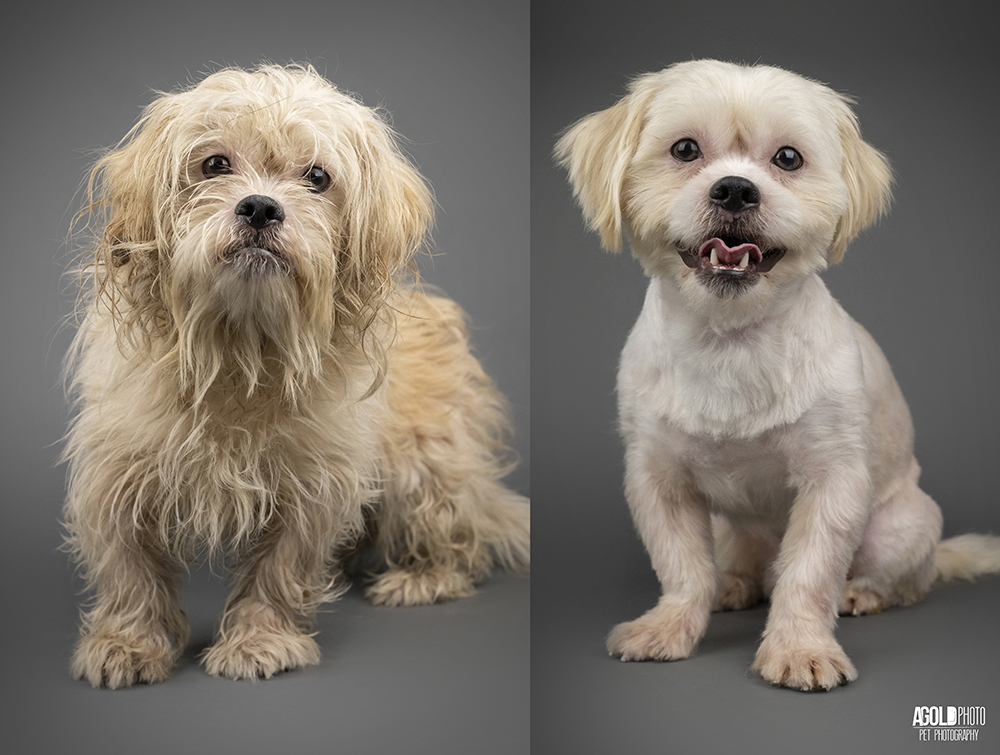
Add a good, clear, up-close picture of your pet. If you have a dog that gets groomed and clipped, take pictures showing what he looks like before and after grooming. 

Image result for before and after grooming
A clean, clipped dog can look very different between haircuts and after a few nights sleeping rough. 
Put these flyers up around where the pet was lost, and around your neighborhood, and don't forget the power of social media. Facebook is great for getting the word out. Nextdoor is a social media site that posts to people in your area; easy to use and a good resource for getting those lost and found critters back home.

Fortunately, animals have a natural homing instinct and if they stray from their yard and home, they can usually find their way back. A slightly different situation is the indoor cat that gets outside. Because they haven't established their scent outside the house, they have difficulty recognizing what is home. If your indoor cat gets outside, they often find a place to hide and lay low. The first thing to do is to put their litterbox outside. The familiar scent will guide them. Because they want a place to hide and be safe, put a box or crate outside with a towel, blanket, or shirt inside that has your scent on it. 

Image result for cat box outside
Something as simple as this works just fine. 
I used this strategy myself when our cat Speck streaked outside through the screen door late one night. She was gone over a month, and then one day I came home and she was sitting inside the shelter box, waiting for someone to let her in. She had lost a lot of weight, and we think she probably hid in someone's shed and got shut in accidentally. When a cat goes missing, it's a good idea to go around to your neighbor's homes and ask them to check any outbuildings, to make sure the cat isn't trapped inside. 

Another special situation is the dog out of place, like if you go hiking or hunting. An excited dog following a scent or running after wildlife might not respond to your calls, or might be farther away than you realize. Where's that dog gone off to?The worst part is when it's time to go home and you still haven't found your dog. How can you just leave? It feels like you're abandoning him! 

Again, use the power of scent recognition and tracking. Leave a blanket or jacket in the spot you were last together. (Don't leave food, as that might attract other wildlife.) If you have a crate, that's great. Attach a note to these items, if you can, saying that you're attempting to find a lost dog -- that way other people won't assume the stuff is litter. Come back and check often. My dad had to do this when our dog Duchess didn't respond to his calls. He came home after dark feeling just awful, but the next morning he went out to look some more and there she was, curled up on his hunting coat waiting for him. Where did you go, man? I've been here all night!

I sincerely hope your pet never gets lost, and is always safe and happy at home or right by your side.  

Tuesday, November 12, 2019

What's in your cat box?

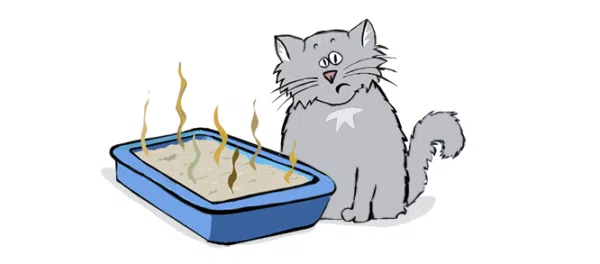
When I was a kid, there was one kind of cat litter. It was grey and gravel-y and came in a heavy paper bag. When you dumped it into the catbox, a choking cloud of acrid dust would come up. When the cats were done with their business, it stank. In my childhood home, cats were encouraged to go outside, and the catbox was located in the basement if they needed it. Cleaning it was a horrible, hated chore. 

Image result for smelly cat box
I'm sure the cats weren't too happy about the whole thing, either,

Then clumping litter came out, and that was just awesome because it made it easy to get all the yucky stuff out, leaving clean litter behind. I love a good clumping litter. It's what I use and recommend. And in the last twenty years or so, dozens of other litter varieties have come on the market.

Image result for kinds of cat litter
So many kinds of litter! And these are only a few!

"Oh boy," you're thinking, "Now she's going to start telling us her opinions on all the things wrong with any other kind of litter."

But actually, I'm not. And here's why:

Cats are finicky. They like what they like and hate what they hate, and often make their feelings quite clear about preferences.

I will say that most cats seem to prefer finer-textured, unscented litter. They like it to be nice and deep for good digging and burying, and they like it to be clean.

I've got clients that use pine pellets, crushed walnut shells, recycled paper, ground corn cobs, wheat pellets -- all kinds of different litter. There are definitely some I find easier to keep clean than others but when it comes right down to it, if your cat is happy and healthy using it, it's a win. (However, I have heard the desiccant crystals can be hard on a cat's paws, causing dryness and cracking.) So find one that you and your cat like, and to heck with anyone else's opinion.

Because if your cat is unhappy with its litterbox, you're going to find out in a variety of awful ways.

-- They will find another place to do their business: laundry baskets, your bed, closets, etc. I guarantee you will not be happy with their choice, and it is very difficult to get the smell of cat whiz out of anything.

--They will not use the box as frequently as they need, preferring to "hold it" until they simply must. This can lead to bladder infections and other issues.

--They will do a "hit and run" where they spend as little time as possible in the box, leaving deposits unburied. Ahh, the aroma. It wafts, this bewitching scent, throughout the house.

Image result for disgusted face
"Welcome home. I hate this litter. Love, your cat."
Find one you both like. Keep it clean. That's pretty much it!